

Why Are My Tires Wearing Unevenly? Tire Wear Patterns, Alignment Issues & How to Fix Them
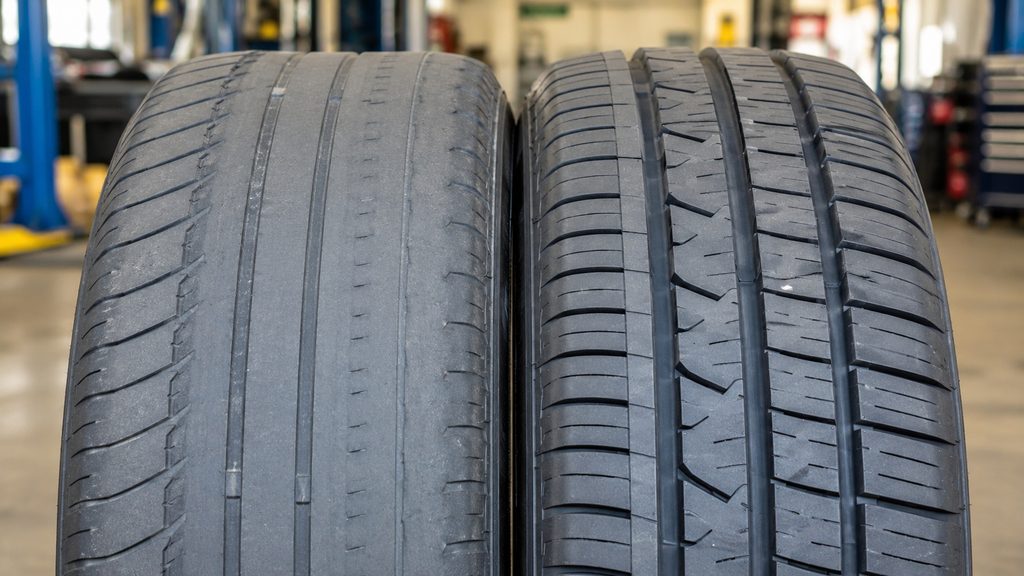
Have you noticed your tires look rougher on one side, or felt your car drift a little when you let go of the wheel? You’re not imagining things. Uneven tire wear is common, and it’s also one of the most misunderstood signs that your vehicle needs attention. The good news: once you know what to look for, it’s easy to spot the underlying cause.
This guide covers the most common tire wear patterns and what each one means. It also explains how tire pressure, alignment, and suspension affect how your tires age. By the end, you’ll know whether you’re dealing with a quick fix or something bigger.
What Causes Uneven Tire Wear?
Most uneven wear comes down to one of four things:
- Tire pressure that’s too high or too low
- Wheel alignment that’s out of spec
- Worn suspension components that aren’t holding your wheels the way they should
- Driving and maintenance habits, like skipping rotations or regularly carrying heavy loads
Sometimes it’s just one cause. Often it’s more than one — say, a slow leak plus an alignment that’s been off since you hit a pothole last winter. The wear pattern on your tire is like a record of what’s been happening under your car. Once you learn to read it, the mystery goes away.
Common Tire Wear Patterns — What Yours Is Telling You
Feathering
Feathering looks like the tread blocks are smooth on one edge and sharp on the other. It’s almost like the tire was combed in one direction. This is a classic sign of a toe alignment problem. The tire drags sideways a bit as it rolls, so one edge wears faster than the other.
Cupping (Scalloped Wear)
Cupping shows up as dips or scoops around the tire. Some call it a “scalloped” edge. This usually points to a suspension problem. Worn shocks or struts aren’t controlling the tire’s bounce, so it hops slightly instead of staying flat on the road.
Wear on the Inside Edge
Inside-edge wear is often tied to camber (the top of the tire tilting inward) or a toe alignment problem. Worn suspension bushings or ball joints can cause it too.
Wear on the Outside Edge
Outside-edge wear points the other way. It’s often caused by camber tilting outward, or by hard cornering that loads up the outer tread.
Wear on One Side Only
If one tire looks much more worn than the other three, it’s usually not a full alignment problem. It’s more likely tied to that one wheel’s alignment, a bent part, or uneven weight in the car.
Is Uneven Tire Wear Dangerous?
It can be, depending on how far it’s gone. Uneven wear cuts down your tire’s grip on the road right when you need it most — braking, cornering, or driving on wet or icy roads. A tire that’s thin on one edge and full on the other won’t grip evenly. That can hurt your stopping distance and stability.
It’s usually not an emergency the moment you notice it. But it’s not something to put off either. The longer it goes on, the faster it tends to get worse, since the tire isn’t sitting flat on the road anymore. If you’re also feeling vibration, pulling, or a change in handling, get it looked at soon.
Vehicle Pulling & Steering Symptoms
Car Pulls Right or Left
A car that keeps drifting to one side, even on a flat, straight road, is one of the clearest signs of an alignment issue. It can also mean uneven tire pressure side to side. Check your pressure first before you assume it’s alignment.
Steering Wheel Off-Center or Crooked
If your steering wheel isn’t straight when your wheels point straight ahead, that’s almost always an alignment issue. It’s an especially strong sign if it started right after you hit a pothole or curb.
Steering Wheel Shake
Shaking in the steering wheel, especially at highway speed, often points to a balance issue rather than alignment. But a badly worn tire from long-term misalignment can also cause it.
Tire Pressure & Uneven Wear
Tire pressure affects wear — and safety — more than most drivers realize. Underinflated tires flex too much, which wears down the outer edges faster and builds up heat. Overinflated tires do the opposite, bulging slightly in the middle so wear concentrates right down the center of the tread.
This matters beyond tire life, too. Tires that run low on air get hotter and are more likely to fail. That heat also speeds up uneven wear. Checking your pressure once a month, including the spare, is a simple habit that protects your tires and your safety.
If you keep topping off one tire more than the others, or your TPMS light keeps coming back on, that’s usually a slow leak. Get it checked before it becomes a bigger problem.
Alignment & Suspension — the Root Causes
What a Wheel Alignment Actually Corrects
“Alignment” covers three angles that affect how your tires sit and roll:
- Toe — whether the front of the tires point slightly in or out
- Camber — whether the top of the tire tilts in or out
- Caster — the angle of the steering axis, which affects stability and steering return
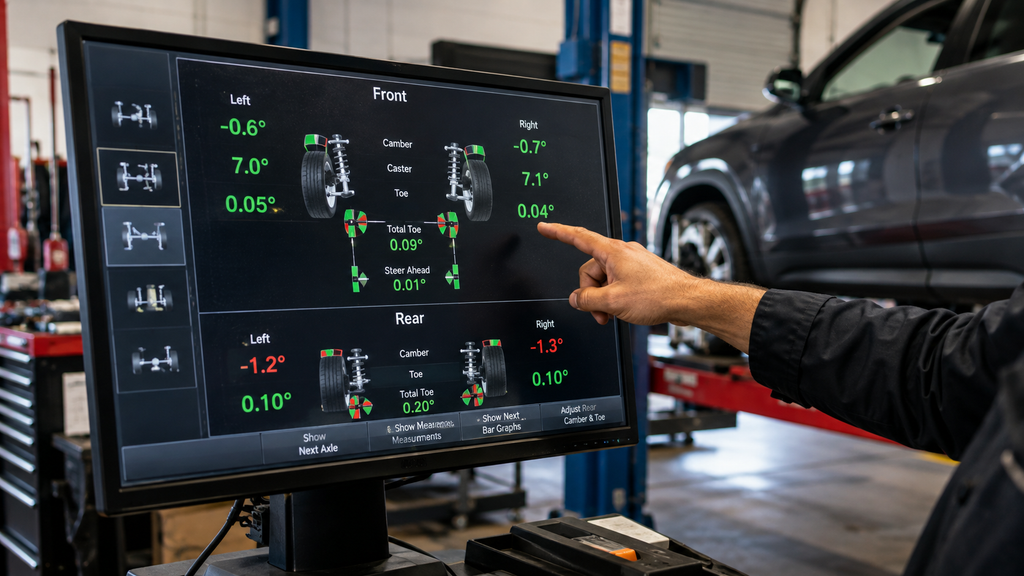
These angles drift out of spec from potholes, curbs, worn parts, or just everyday driving over time. When that happens, your tires stop wearing evenly, and your car may pull or feel less stable. A proper alignment resets all three to the manufacturer’s spec. Our tire and alignment service includes a full inspection plus precision adjustments, so if something’s off, we catch and fix it in the same visit.
How Often Should You Align Your Car?
Most manufacturers recommend an alignment check once a year, plus an extra check any time you hit a big pothole, curb a wheel, or have suspension work done. If you notice pulling, a crooked steering wheel, or uneven wear, get it checked regardless of when the last one was.
Alignment isn’t just about comfort. It’s a real cost factor too. Misaligned tires can wear about 10–30% faster than properly aligned ones. A 4-wheel alignment usually runs $100–$175, so catching the problem early is far cheaper than replacing a tire ahead of schedule.
Worn Suspension Components
Shocks, struts, bushings, and tie rods all help keep your wheels planted and aligned. As these parts wear out, your tires can develop cupping or uneven contact with the road, even if the alignment itself is still in spec. If your vehicle feels bouncier than it used to, or the ride has gotten rougher, worn suspension parts are worth checking too.
How to Prevent It & Extend Tire Life
The good news is that most causes of uneven wear are preventable with a few consistent habits:
- Rotate your tires regularly. Manufacturers commonly recommend rotating every 5,000–8,000 miles to even out wear across all four tires. Bundle this with your regular service visit to stay on schedule — our preventive maintenance service includes tire rotation with routine visits.
- Check tire pressure monthly. It takes two minutes and catches slow leaks before they cause real wear.
- Don’t ignore pulling or vibration. These get more expensive to fix the longer you wait.
- Get your alignment checked every year, or sooner if you hit something hard.
Tire Balancing vs. Alignment — They’re Not the Same Thing
People mix these two up a lot, but they fix different problems. Balancing corrects uneven weight around the wheel and tire — that’s what causes vibration at speed. Alignment corrects the angles your wheels sit at — that’s what causes pulling and uneven tread wear. Depending on your symptoms, you might need one, the other, or both.
Do You Need New Tires, Just an Alignment, or Both?
If the tread is still fairly even and you’re just noticing pulling or a crooked steering wheel, an alignment alone often fixes it. If the wear is already heavy — feathering, cupping, or one edge much balder than the rest — the tire itself may need replacing. You’ll also need to fix whatever caused the wear, or the new tire will wear the same way.
Not sure which situation you’re in? That’s a completely normal thing to ask a shop. A quick tread and alignment check can tell you exactly where you stand. That way you don’t spend money on tires you don’t need yet, and you don’t put new tires on a car that will just wear them unevenly again.
When to See a Professional
A few signs mean it’s worth getting looked at sooner rather than later:
- Your car pulls noticeably to one side
- The steering wheel is off-center or vibrates
- You can see or feel an uneven wear pattern on any tire
- It’s been over a year since your last alignment check
- You recently hit a significant pothole or curb
Noticing uneven tire wear or steering problems? Schedule a professional tire and alignment inspection today. Our technicians can identify the root cause, help extend the life of your tires, and restore safe, predictable handling. Stop by our tire shop or give us a call to get started.
FAQ
What causes tires to wear unevenly?
The most common causes are incorrect tire pressure, alignment that’s out of spec, worn suspension components, and driving/maintenance habits like skipping rotations.
Can I drive with uneven tire wear?
In most cases it’s not an immediate emergency, but it does reduce grip and can worsen quickly. It’s worth having it checked before it turns into a bigger repair — or a safety issue.
Does a wheel alignment fix uneven tire wear?
An alignment corrects the angles causing new wear going forward, but it won’t reverse tread that’s already worn away. If the tire is significantly worn, you may need both an alignment and a replacement.
Can suspension problems ruin new tires?
Yes. If worn shocks, struts, or bushings caused the original wear, putting new tires on without addressing the suspension issue usually just leads to the same pattern happening again.
Can tire pressure cause one-sided wear?
Uneven pressure between tires can contribute, but wear that’s consistently on one edge of a single tire is more often an alignment issue than a pressure issue.
Should I replace all four tires at once?
Not always — it depends on how evenly your existing tires have worn and how much tread life is left on the others. A technician can advise based on your specific situation.
Regular tire rotations and wheel alignments are some of the most cost-effective ways to protect your investment and improve your vehicle’s performance. Ask our team about your vehicle’s recommended maintenance schedule.