

How to Read Your Tires (and Check Your Tread) in 5 Minutes
Your tires are covered in a secret code. You’ve walked past it a thousand times on your way to the driver’s seat. And it’s printed on the only part of your car that actually touches the road.
Learning to read it pays off. Knowing your tire size makes shopping for new tires faster. The date code tells you if your tires are getting too old. And your tread depth decides how quickly you can stop on wet or snowy roads.
By the end of this guide, you’ll be able to decode your sidewall and check your tread with a coin in under five minutes.
Where to Find Your Tire Information
There are three places to look:
- The tire sidewall. The raised letters and numbers on each tire hold its size, ratings, and age.
- The driver’s door jamb. Open the driver’s door and look for a sticker called the tire placard. It lists the tire size your car came with and the recommended air pressure.
- Your owner’s manual. It’s a good backup if the door sticker is worn or missing.
One quick tip: you may not find the full date code on the outside of the tire. Federal rules only require the complete DOT code on one sidewall, according to Tire Rack, so you might need to check the side facing under the car.
How to Read Your Tire Size (Using a Real Example)
Let’s use one example the whole way through: P225/60R16 98H.
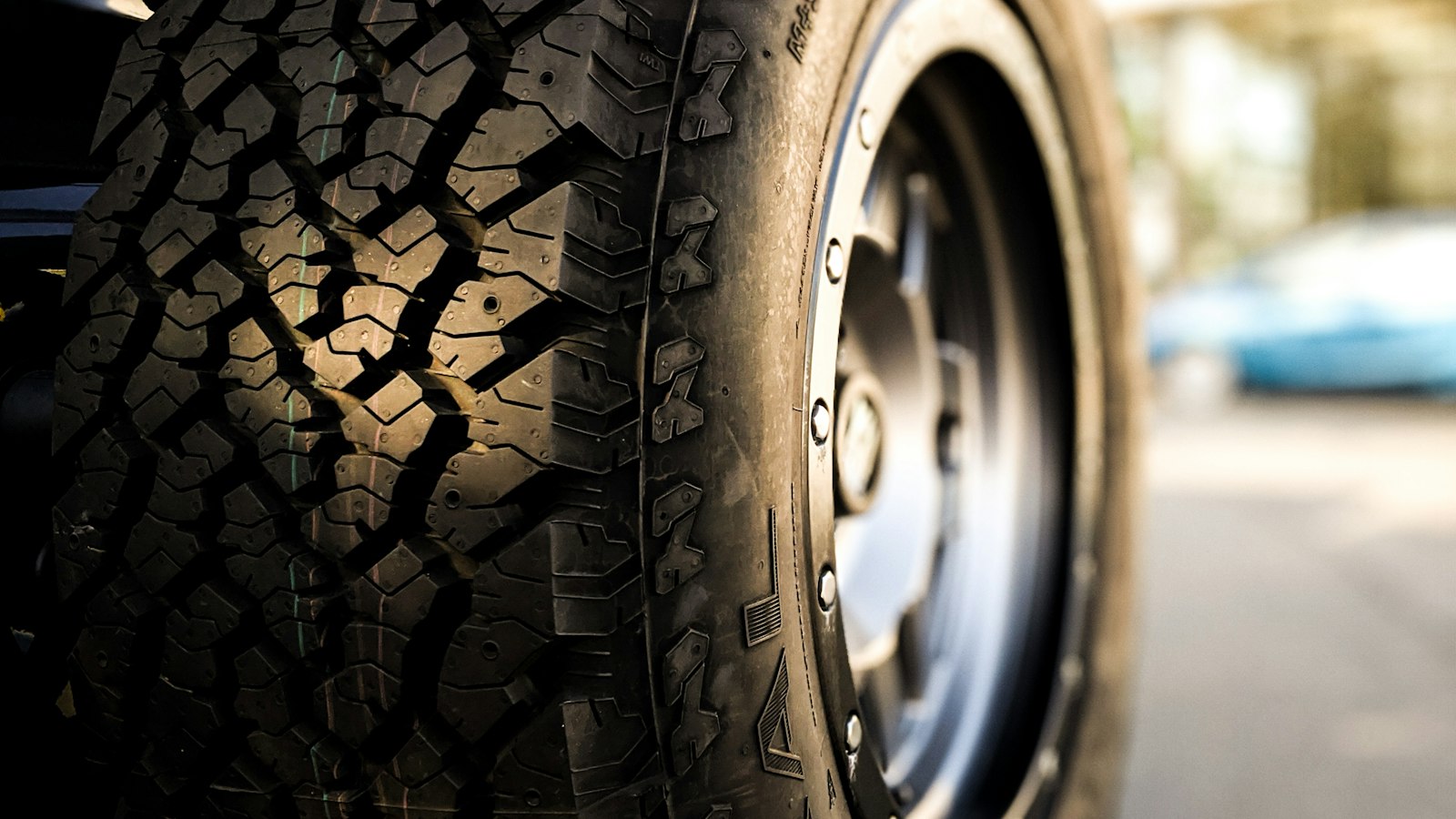
Here’s what each piece means:
- P is the tire type. “P” stands for passenger vehicle. “LT” means light truck. If there’s no letter, it’s a metric (European) size.
- 225 is the tire’s width in millimeters, measured from sidewall to sidewall.
- 60 is the aspect ratio. It means the sidewall’s height is 60% of the tire’s width. A lower number means a shorter, sportier sidewall.
- R means radial, which is how nearly every modern tire is built.
- 16 is the wheel diameter in inches. This tire fits a 16-inch wheel.
When it’s time for new tires, stick with the size on your door placard unless a tire pro recommends something else.
Load Index and Speed Rating: The Two Numbers People Skip
The last part of our example, 98H, holds two more ratings.
- 98 is the load index. It tells you how much weight each tire can safely carry. A load index of 98 means each tire can handle up to 1,653 pounds.
- H is the speed rating. It’s the top speed the tire is built to handle for a sustained period. An H rating means up to 130 mph.
Here are some common speed ratings:
| Rating | Max speed |
|---|---|
| S | 112 mph |
| T | 118 mph |
| H | 130 mph |
| V | 149 mph |
| W | 168 mph |
| Y | 186 mph |
The rule of thumb is simple: don’t go lower than what your vehicle calls for. That matters most on trucks and SUVs that tow or haul heavy loads.
How to Tell How Old Your Tires Are (the DOT Code)
Look for the letters DOT on the sidewall. A string of letters and numbers follows, called the Tire Identification Number. The last four digits are the date code.
For tires made since 2000, Discount Tire explains that the first two digits are the week and the last two are the year. So:
- 2423 means the tire was made in the 24th week of 2023.
Why does age matter if your tread still looks good? Because rubber breaks down over time, even on a tire that barely gets driven. Utah’s mix of hot summers and freezing winters doesn’t help. NHTSA notes that some tire manufacturers recommend replacing tires after 6 to 10 years, no matter how much tread is left. That’s especially worth checking on a used car, where you don’t know the tires’ history.
Bonus tip: the DOT code is also how tires are tracked for safety recalls, so it’s worth registering new tires with the manufacturer.
Other Sidewall Markings Worth Knowing
A few more markings you might spot:
- UTQG ratings. These grade a tire’s treadwear (a number, where higher generally means longer-lasting), traction (AA, A, B, or C), and heat resistance (A, B, or C).
- M+S. This stands for “mud and snow.” Many all-season tires carry it.
- The mountain-snowflake symbol. This one matters in Utah. It means the tire meets a tougher standard for snow traction than a basic M+S tire.
- Max PSI. This is the most common mix-up on the sidewall. The number printed on the tire is the maximum pressure it can hold, not what you should fill it to. Always use the recommended pressure on your door jamb sticker.
How to Check Your Tire Tread (3 Easy Ways)
Most all-season tires start with about 10/32 to 11/32 of an inch of tread, according to Consumer Reports. Here’s how to see how much you have left.
The Penny Test (Bare Minimum)
Put a penny into one of your tire’s main grooves with Lincoln’s head pointing down. If you can see the top of his head, your tread is at or below 2/32 of an inch.
That’s the line where NHTSA says tires are no longer safe and should be replaced. In Utah, it’s also the legal limit. Utah Code 41-6a-1636 prohibits driving on tires with less than 2/32 of an inch of tread.
The honest truth about the penny test: if you fail it, you’re overdue. Passing it doesn’t mean your tires are in great shape.
The Quarter Test (Better)
Now try a quarter, with Washington’s head pointing down. If you can see the top of his head, you’re at about 4/32 of an inch.
That’s the point where Consumer Reports says it’s time to start shopping for new tires. Both Consumer Reports and AAA recommend the quarter test, especially before winter.
Tread Wear Bars and Tread Depth Gauges
Look closely at the bottom of your tire’s grooves. You’ll see small raised bars running across them. These are tread wear indicators. When the tread is worn down flush with those bars, the tire is done.
For an exact number, pick up a tread depth gauge. They cost a few dollars at any auto parts store.
Whichever method you use, check a few spots on each tire: the inner edge, the center, and the outer edge. Tires don’t always wear evenly.
What Uneven Tread Wear Is Telling You
If your tread is deeper in some spots than others, your tires are trying to tell you something:
| Wear pattern | Likely cause |
|---|---|
| Worn in the center | Overinflation |
| Worn on both outer edges | Underinflation |
| Worn on one edge only | Alignment problem |
| Cupping or scalloped patches | Worn suspension parts or an out-of-balance tire |
Uneven wear means something needs fixing, not just the tires. Put new tires on a car that’s out of alignment, and they’ll wear out early too. A tire and alignment check gets to the root cause. For a deeper look at each pattern, see our guide on why tires wear unevenly.
Why Tread Depth Matters More Than You Think
Tread isn’t just about grip. It’s how your tires push water and slush out of the way so the rubber can stay in contact with the road. As tread wears down, your stopping distance gets longer, especially on wet roads.
The numbers back that up:
- In a study reported by Consumer Reports, AAA found that tires with 4/32 of an inch of tread could take up to 87 feet longer to stop on a wet road than new tires.
- Consumer Reports’ own testing found that tires worn to 4/32 took almost 30 feet more, on average, to stop on wet pavement.
- An NHTSA study found that about 26% of tires with 0 to 2/32 of an inch of tread had problems on vehicles that crashed, compared with 8% of tires at 3/32 to 4/32, according to the European Rubber Journal.
- NHTSA reports that 646 people died in tire-related crashes in 2023.
Good tires and good brakes work as a team. Your brakes slow the wheels, but your tread is what actually grips the road. In Utah, snow, slush, and canyon roads punish worn tread first.
What Utah Law Says About Tread Depth
Utah law sets the minimum at 2/32 of an inch. During a safety inspection, Utah Administrative Code R714-160-8 says a tire is rejected if:
- The tread is below 2/32 of an inch in any two adjacent major grooves at three evenly spaced points around the tire, or
- The cords or secondary rubber underneath are showing.
Inspectors measure away from the tread wear bars. In plain English: one shallow spot won’t fail a tire, but tread that’s worn low all the way around will.
Keep in mind that “legal” and “safe for winter” aren’t the same thing. The law draws the line at 2/32. Consumer Reports and AAA suggest replacing tires closer to 4/32.
When to Replace Your Tires: A Quick Checklist
It’s time for new tires if any of these are true:
- Your tread is at 4/32 of an inch or less heading into winter, or at 2/32 no matter the season. Below 2/32 is illegal to drive on in Utah.
- Your tires are older than the manufacturer’s recommended age, even with tread left.
- You see cracks, bulges, or bubbles in the sidewall.
- Cords or steel are showing through the rubber.
- You have a puncture in the sidewall, which can’t be safely repaired.
- You feel a vibration or pull that doesn’t go away after balancing or an alignment.
A quick tire check during your preventive maintenance visits helps you catch these early, before they turn into a roadside surprise.
Not Sure? Let Us Take a Look
If you’d rather not crawl around your car with a quarter, we get it. At Markosian Tire and Service, our team can check your tread depth, tire age, and wear patterns in just a few minutes. If something’s off, we’ll show you what we found and explain your options in plain terms.
Stop by our Taylorsville or Tooele shop or schedule a visit, and we’ll make sure your tires are ready for whatever Utah throws at them.
Frequently Asked Questions
What do the numbers on my tire mean?
Take a size like P225/60R16 98H. “P” means passenger tire, 225 is the width in millimeters, and 60 is the sidewall height as a percentage of the width. “R” means radial, and 16 is the wheel size in inches. Finally, 98 is the load index and “H” is the speed rating.
How do I know how old my tires are?
Find “DOT” on the sidewall. The last four digits are the date code. The first two are the week, and the last two are the year. For example, “2423” means the 24th week of 2023.
Is the penny test or the quarter test better?
The quarter test. The penny tells you when you’ve reached 2/32 of an inch, which is already worn out. The quarter tells you when you’re at about 4/32, which is when Consumer Reports and AAA suggest shopping for new tires, especially before winter.
What is the legal minimum tire tread depth in Utah?
2/32 of an inch. Utah law prohibits driving on tires with less than that, and a tire worn below 2/32 in adjacent grooves around the tire will fail a safety inspection. For winter driving, it’s smart to replace tires well before that point, around 4/32.
How much tread does a new tire have?
Most all-season tires start with about 10/32 to 11/32 of an inch. Winter and truck tires often start with more.
Can tires be too old even if the tread looks fine?
Yes. Rubber breaks down with age and weather. Some manufacturers recommend replacing tires after 6 to 10 years, no matter how much tread is left. Cracks in the sidewall are a warning sign.
Should I fill my tires to the PSI on the sidewall?
No. That number is the maximum pressure the tire can safely hold. Use the recommended pressure listed on the sticker inside your driver’s door jamb.